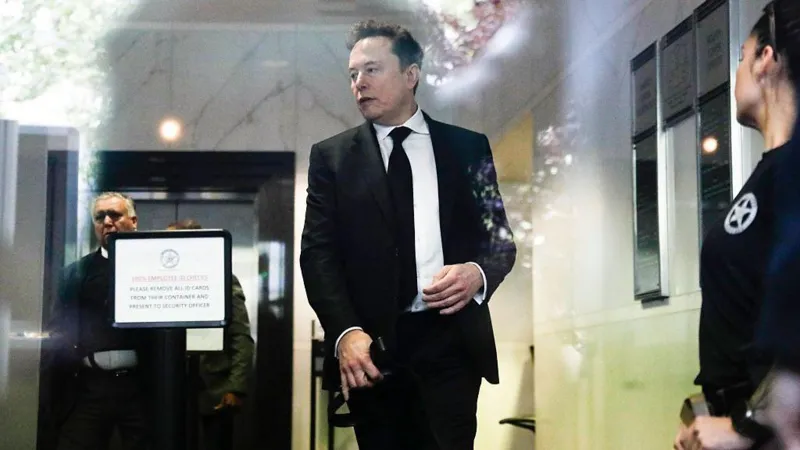































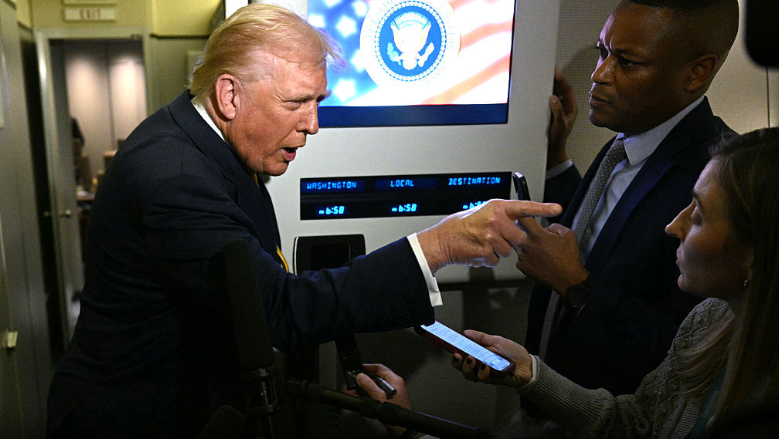
In recent weeks, the world has seen President Donald Trump call female reporters “stupid”, “ugly” and “piggy” after getting asked questions regarding the Epstein files and the suspects of the recent shooting of two National Guard members in Washington D.C. Such rhetoric from one of the most powerful men in the world, behavior that has mostly gone unpunished, has many dangerous effects on women in journalism and beyond.
Over centuries women have fought hard to be in the positions they now serve. They have fought for equality in the workplace, and there has been progress made toward more female leadership roles and representation. But as women get their foot in the White House, representing their publication and asking important questions, they are shut down in few words by the man in charge.
No woman that has undeniably worked hard wants their credibility stolen or to be made out as a fool in their profession. His words, along with the fact that few, if any, stood up for these women, may lead to less women wanting to be journalists, meaning less diversity in the field. Additionally, this behavior from President Trump doesn’t only discourage women from entering the journalism field and asking controversial questions, but it discourages women from entering any leadership role or important position in any field.
Besides the more obvious impact these immature epithets have, the most dangerous, in my opinion, is the normalized sexism. The words said by President Trump display a clear misogyny carried and proudly expressed in his leadership. When one with so much influence freely calls women names and tells them to be “quiet”, what makes it so bad for anyone to do the same? Nothing.
Sexism is most dangerous when it is normalized. When millions watch the videos of these women being humiliated, who in the video is standing up for the women in the moment? From what is shown, not a soul speaks up about what is said by the President. Demeaning women has become a practice normalized and fueled by President Trump, further subjugating women to inequality across fields.
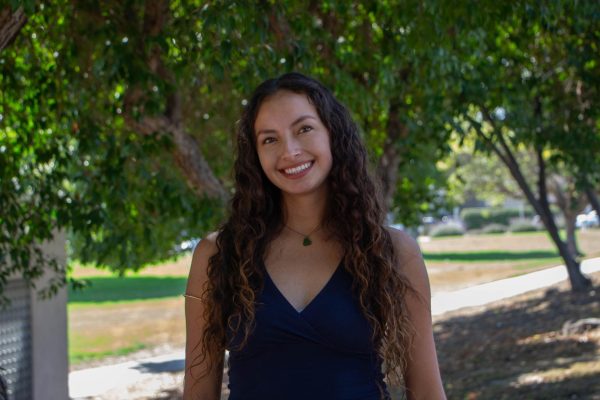
The damaging actions taken by President Trump have reached the impressionable eyes and ears of many journalism students as well, including senior and Arts and Entertainment editor for Buena Speaks, Alyssa Angeles.
“It’s really demeaning to women,” Angeles said. “[His responses] show how he perceives women, even in professional spaces, and it’s just immature.”
Press Secretary Karoline Leavitt responded to questions around the several name-calling incidents by saying “it was proof of [President Trump’s] frankness.” But “frankness” or the “transparency” this administration takes pride in does not excuse the denigration of women.
“[Leavitt] is just saying things to pretend to be honest, and while the government should be transparent, it doesn’t apply to this,” Angeles said.
Those like President Trump, the misogynistic, patronizing bullies, may never change, and I do not believe it is entirely our responsibility to try and alter who they are. However, I believe if we want this rhetoric to change, we must not let events like this go quiet. The less of the retribution President Trump receives, the more power he feels he has to just say whatever with no consequence. This same idea goes with anyone of the same type.
The more condemnation things like this receive from the public will set the standard that sexism is not accepted in the U.S., where all are equally protected under the basis that there is no sex discrimination. So while it may just be a few female reporters now, we cannot let it turn into thousands in the coming years.