






































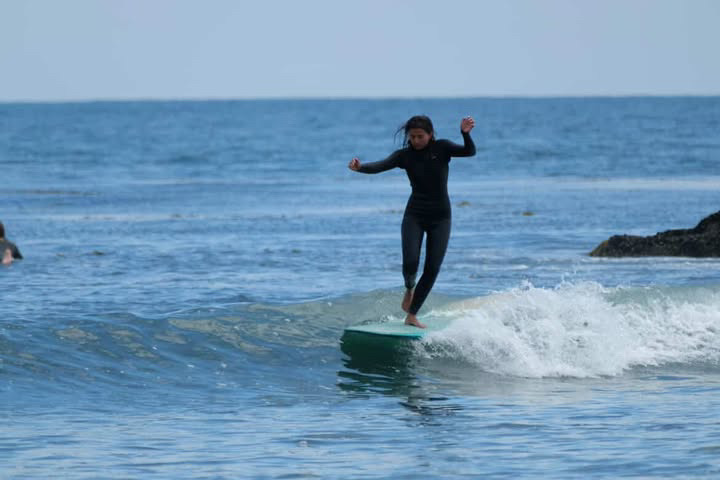









Walking out of the water with my surfboard along C St. in Downtown Ventura, I see beach-goers and tourists shake their heads disappointedly at all the plastic suddenly littering the shore. What they don’t realize is that the “trash” they’re seeing would be better off thrown into the ocean.
“Sometimes, [the Vellela vellela] look like pieces of trash, but then I realized they weren’t,” junior Maritza Morena said. “It feels normal to see them [at the beach] now.”
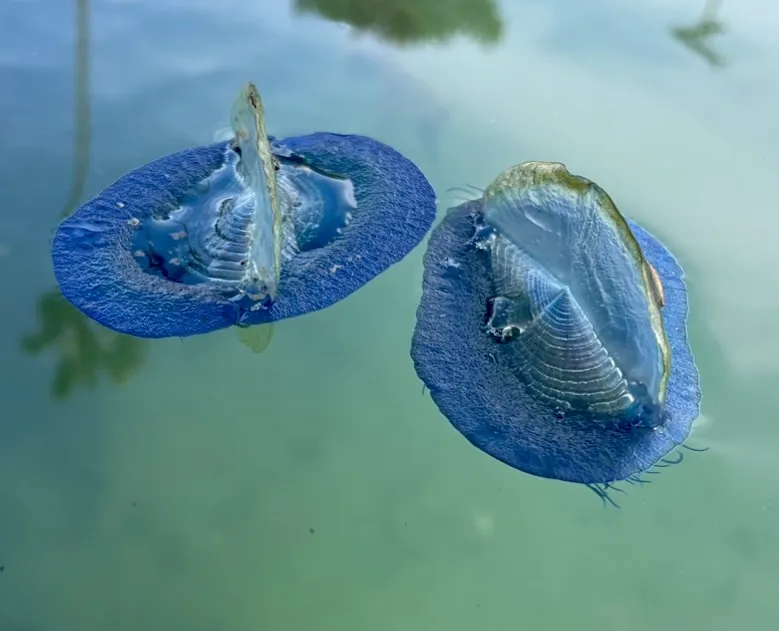
Vellela vellela, known as “blue sailors” and “by-the-wind-sailors” are marine animals appearing similar to jellyfish, with bluish-purpleish flat bodies, short tentacles and a clear sail that guides them through wind and ocean currents. Often associated with jellyfish, blue sailors are actually colonial hydroids, differentiating them. Their bodies are flat and small, with dangling blue tentacles containing stinging cells called nematocysts.
Though these are used to capture prey drifting by, they are not harmful to humans, which I’ve learned from picking one out of the water bare-handed. While this investigation turned out safe for me, I would not recommend touching mysterious, potentially stinging objects from the ocean.
“My boyfriend was going to touch it, but I told him not to because they are jellyfish, but I’ve realized [that] they aren’t poisonous,” junior Gigi Alfino said.
Blue Sailors live off the coast feeding on micro algae and plankton, with their main predators being sea slugs, snails and birds. Being closely related to anemones, they use their tentacles to draw in prey that floats by. While this go-with-the-flow nature allows them to roam endlessly with a constant supply of food, they are easily led astray to be stranded along the coast.
They appear seasonally during spring and early summer along the Pacific coast. Their dried up sails and bodies lose their pigmentation, leaving clear, flakey plastic-like figures blowing in the sand.
The temperature of ocean currents affects where and how they flow. Warm currents, specifically brought on by warming summer water, travel along the surface, bringing in whatever floats on the surface towards beaches.
One thing beach-goers can do to help is to toss living ones back into the water; however, it’s a natural cycle that cannot be avoided.
“I try to scoot them back in the water if I can, if they’re close enough to me,” Alfino said. “But there are so many, sometimes you can’t [get to them all].”
Still, with years of nature revealing oceanic patterns, scientists are still researching the migration and life-cycle patterns of these little fleets of blue sailors. Marine biologists and other researchers have seen them around the world, with large accumulations washing up on the U.S. Pacific coast and the Mediterranean. The evolution of their unique sail-like feature is actively being studied, as well as the phenomenon of their survival during storms and turbulent seas.