























































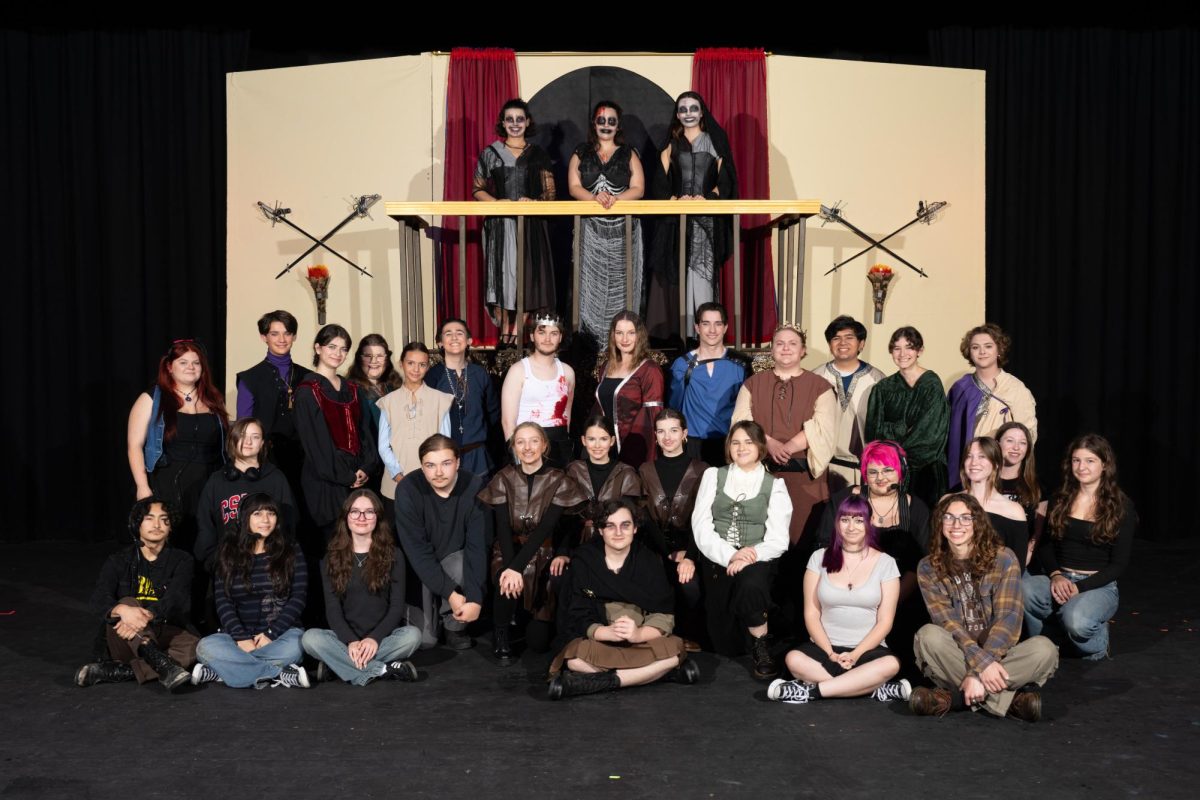
As the cast takes their final bows, and the curtains close on the theater department’s most recent play, “Macbeth”, the hard work and time spent by students to put on the production is much applauded. While the cast are on the stage performing for the audience, behind the props, curtains and even the audience, lies the stage crew who are just as much performing and playing their part as the performers.
In two months, the show is performed. But before opening night, there are countless hours and weeks where the stage crew made up of the stage managers, prop and sound designers and more, plan, build and rehearse as the actors learn their lines and cues.
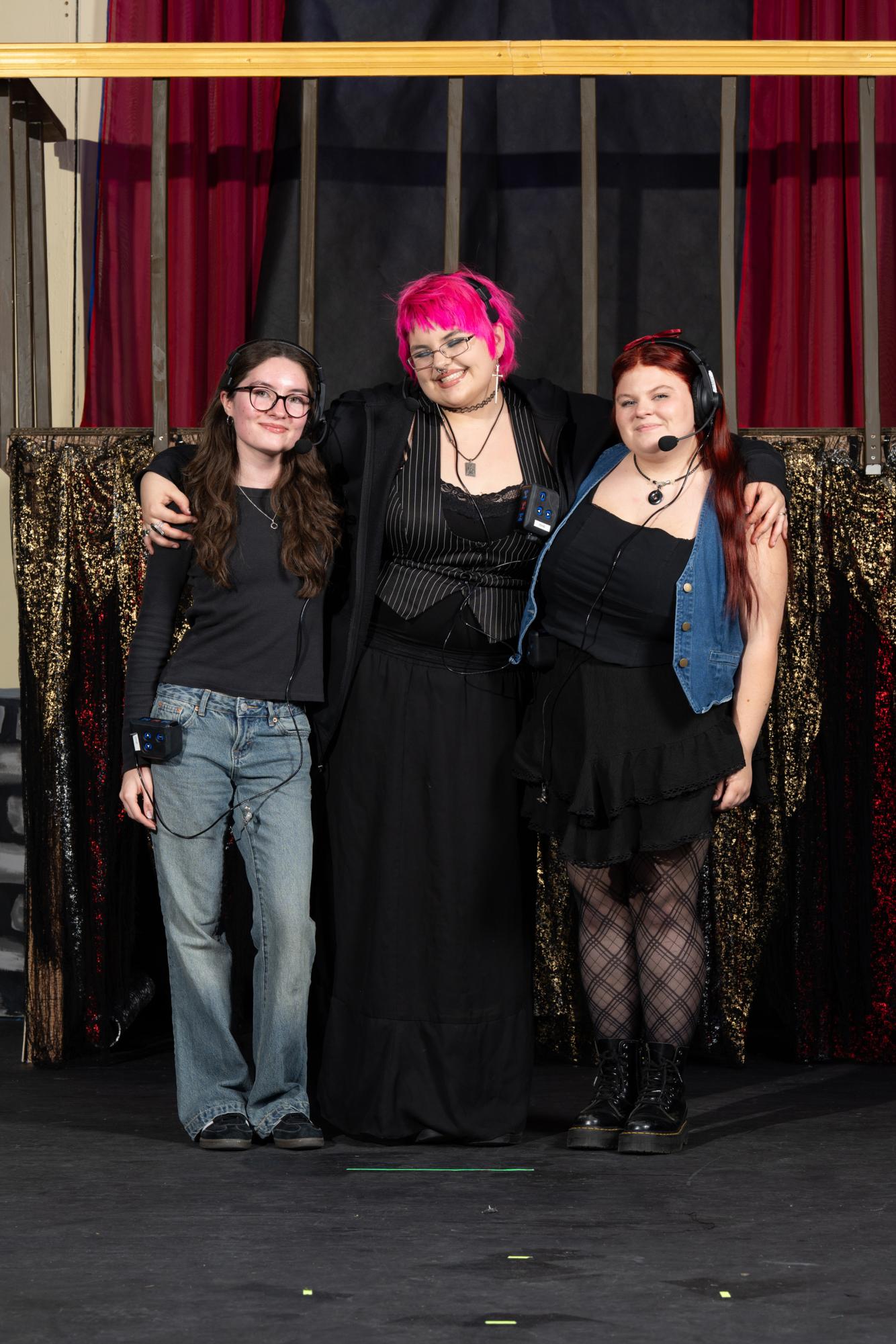
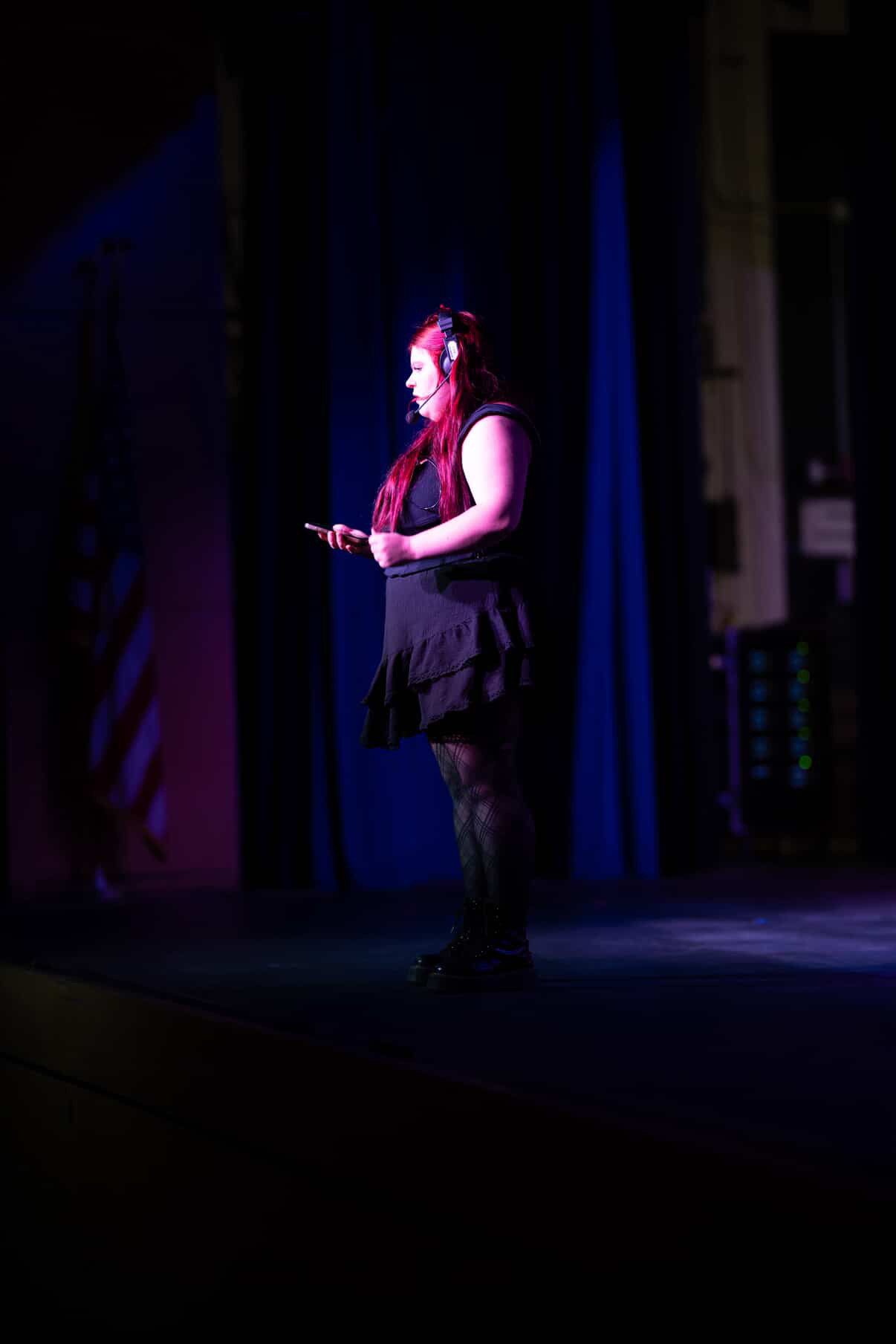
Just below the director and assistant director sits the student stage manager and two assistant stage managers to help guide the cast and the rest of the stage crew. Flexibility and adaptability can be especially used to describe the job of stage managers as they take on new challenges that pop up during rehearsals and production. All of the stage managers assist in moving props for different scenes, managing everyone backstage between scenes and communicating with other crew members spread throughout the theater through headsets to ensure a smooth rehearsal and show.
“Most of the stage managing job comes in around halfway, and once we start getting off the book, we’re working with props because then we’re backstage making sure that we’re keeping everyone in check,” senior and stage manager Tegan Farnsworth said. “But for the first half, a lot of what we’re doing is taking notes in our scripts as well as noting what we need to get done for our stage craft class and other things to get the show running.”
-
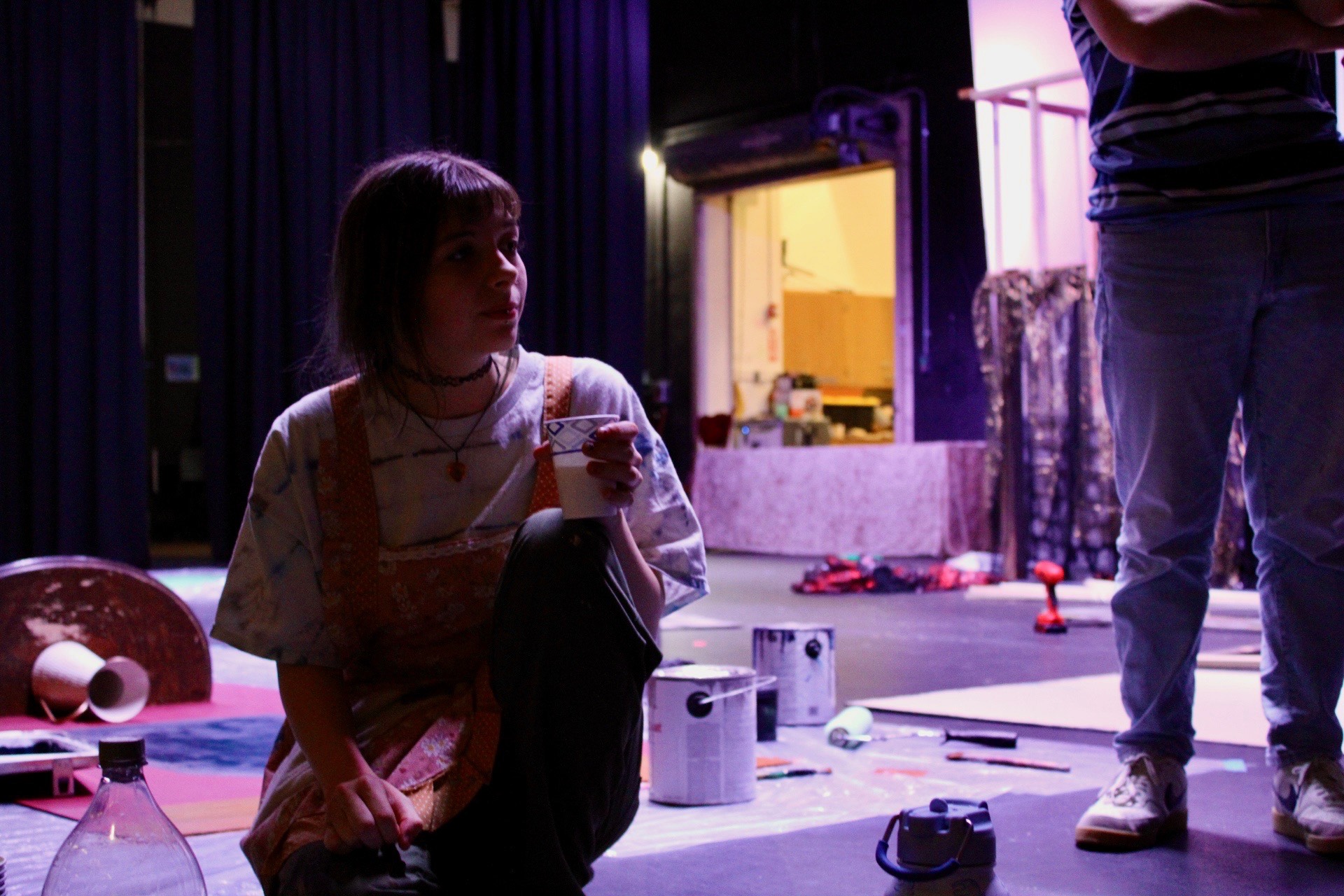
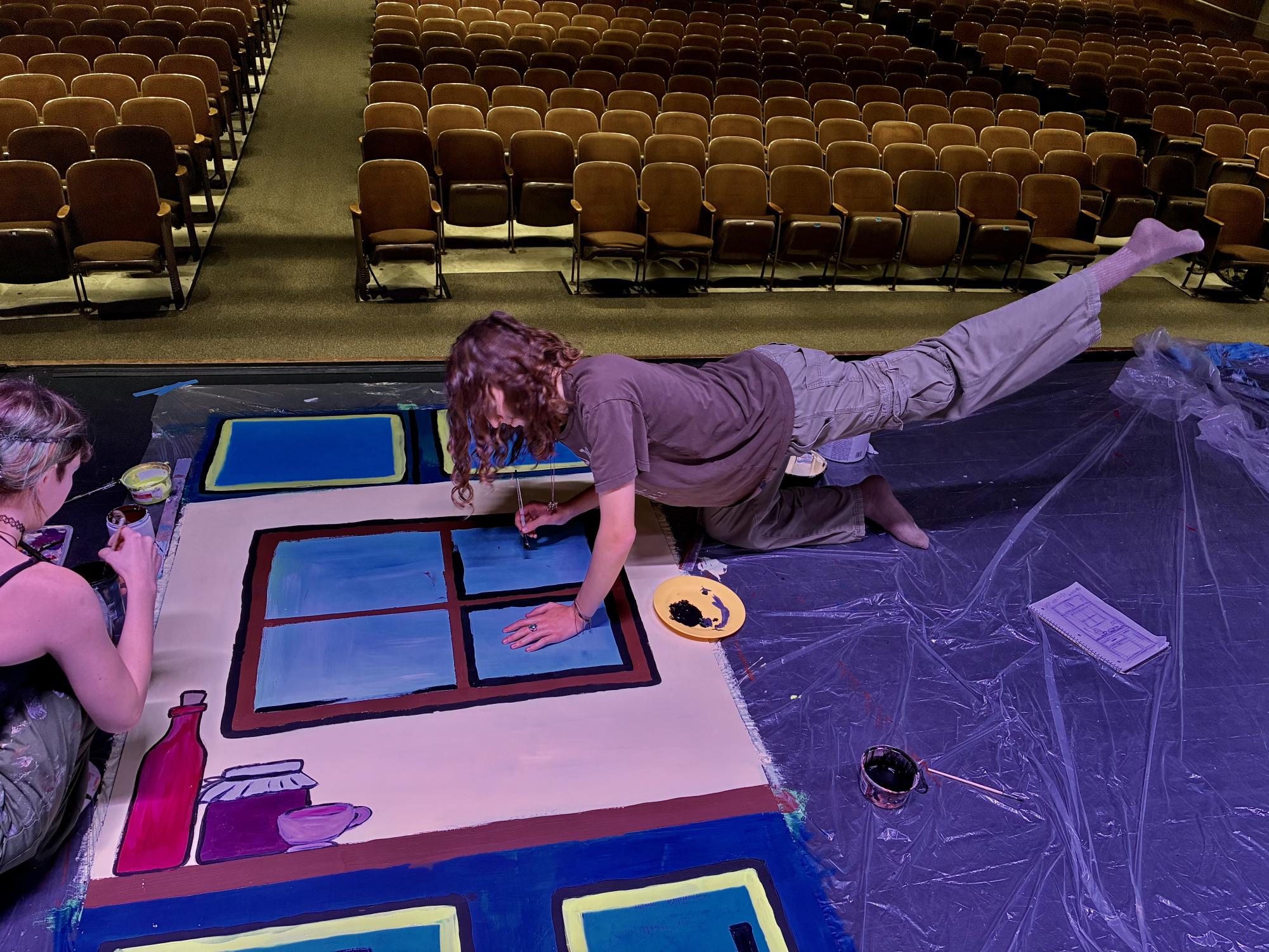
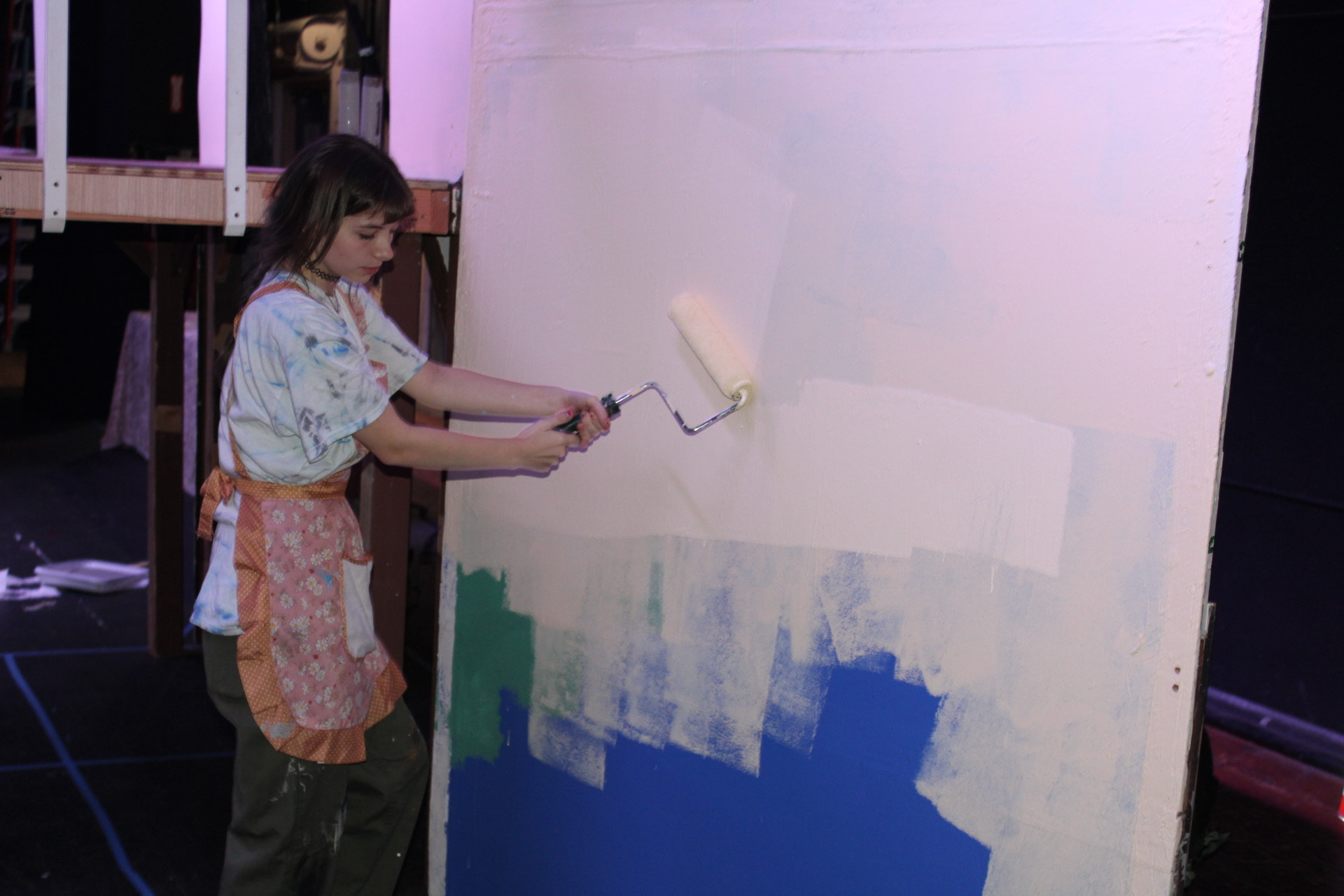
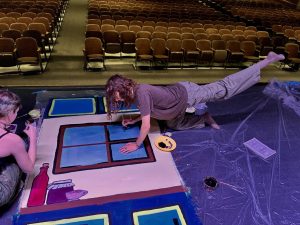
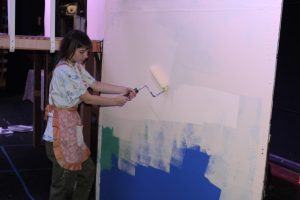
Stage crew working on the background scenes for the play
-
-
-
The three stage managers for Macbeth
-
-
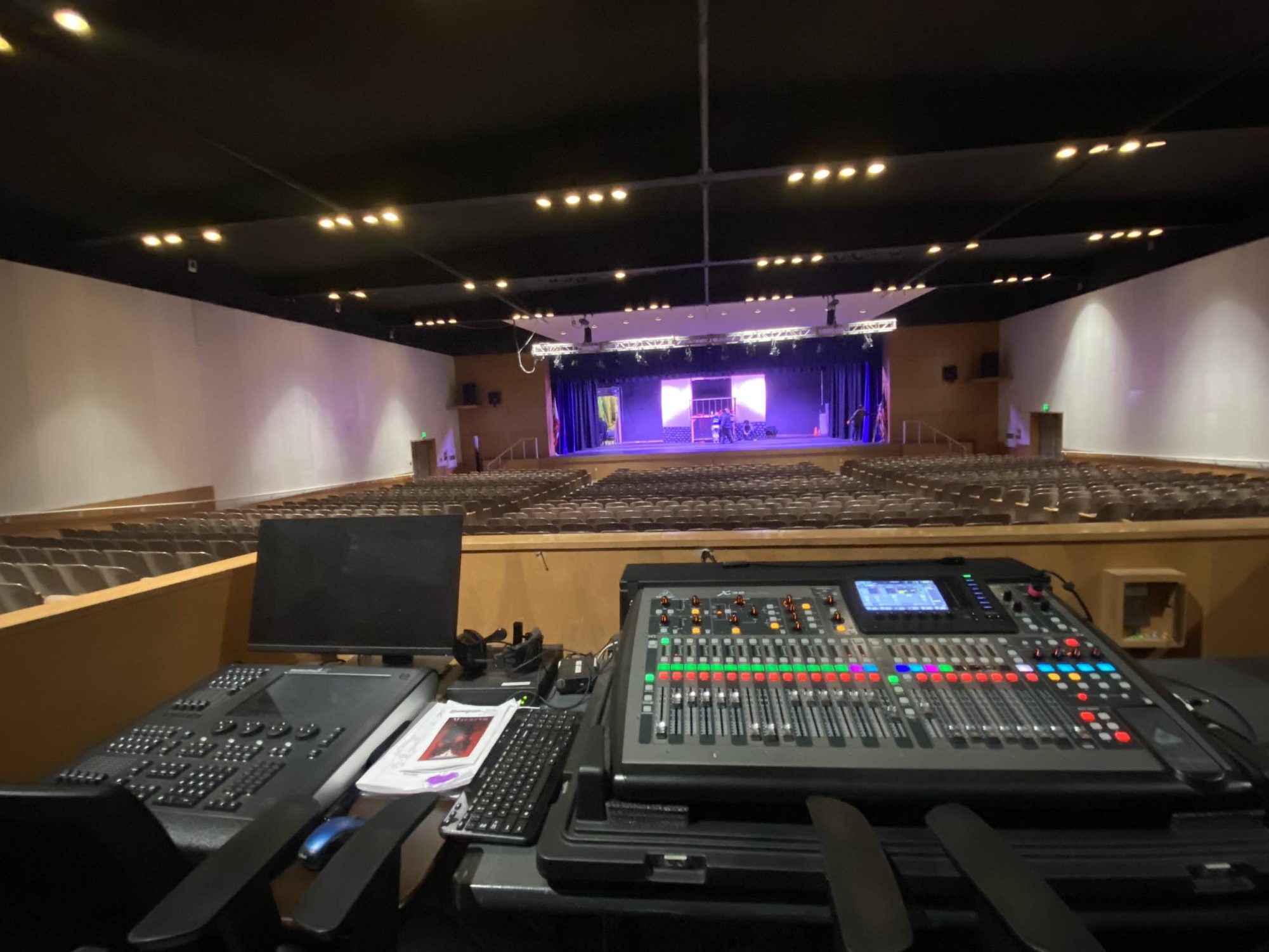
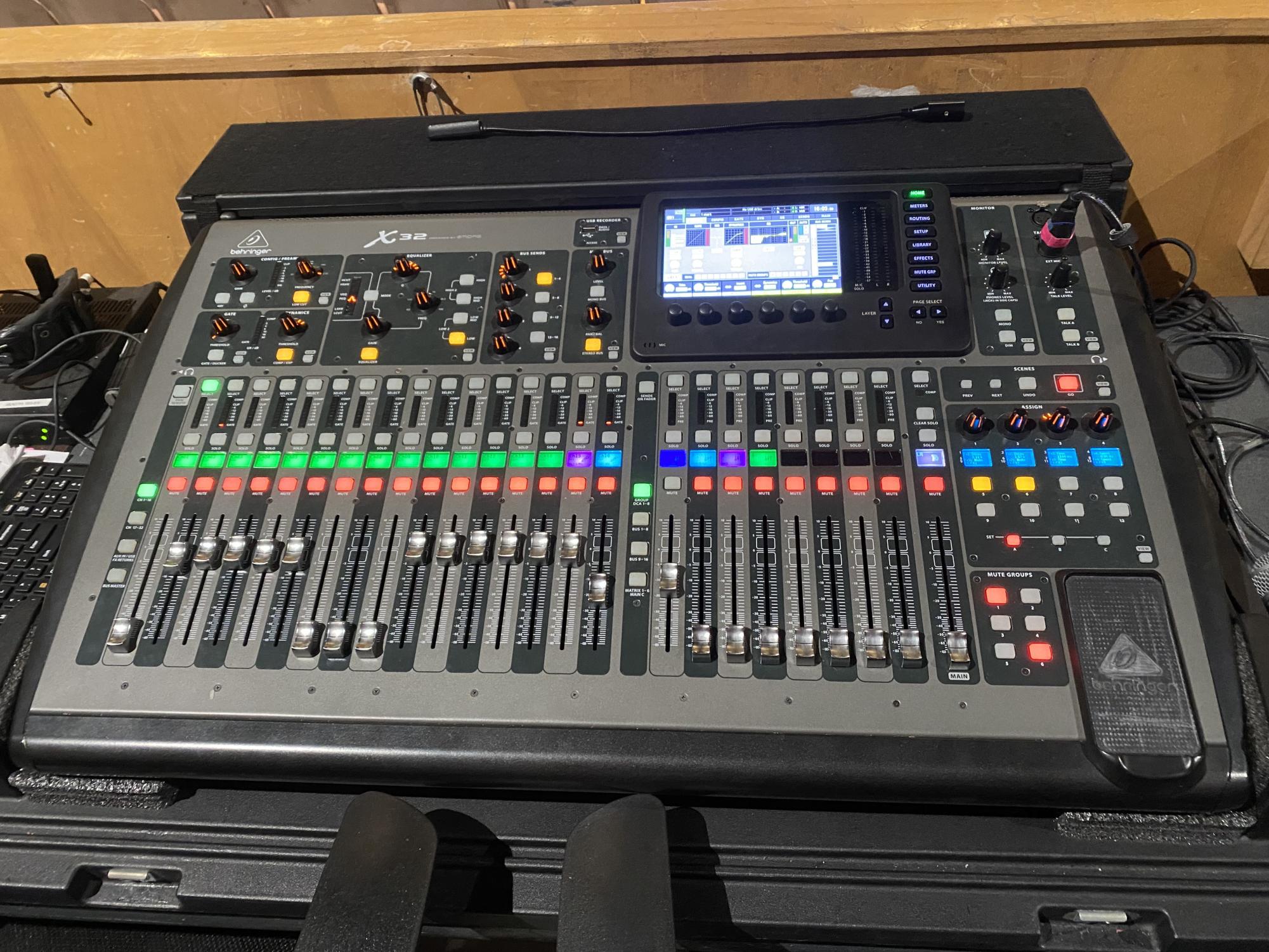
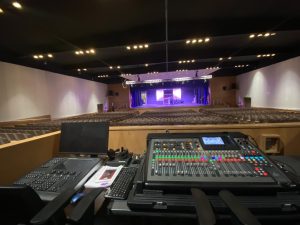
The tech booth where sound and lights are controlled
-


Farnsworth is also the costume designer for Macbeth, having to figure out what costumes everyone was going to wear for a play that was set in 11th century Scotland with little to go off of. In the end, they decided to move forward with Medieval and Renaissance inspired clothing with Scottish kilts that are more recognizable.
“That’s the thing with stage managing: you kind of have to just fill in whenever you need to be because you’re kind of running around doing everything,” Farnsworth said.
Along with learning the ropes of stage managing, junior and first time assistant stage manager Maddie Brackett spent a lot of time helping the cast learn their lines in the early stages.
“I mostly kind of helped people with their lines, so when people were up there and practicing and rehearsing, if they called ‘line’, I would basically tell them the line, or I would correct them if they got it wrong,” Brackett said.
Later in the season, Brackett moved backstage and learned how to open and close the curtains which signaled the beginning or end of a scene during the show. She also managed the fog machine and made sure the actors had their props and costumes when needed.
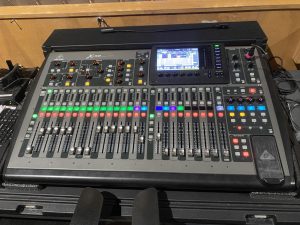
At the back of the theater and behind the audience features the tech booth where all of the sound and lights that enhance the play are controlled. There are four people total in the tech booth who control these elements with three of them cuing in a total of 15 sound effects played throughout Macbeth. As the actors rehearse later in the process, the sound crew practices their sound cues to memorize timing and make sure everything sounds clear and flows with the actors on stage.
Junior Chris Inda, a first year sound technician, explains the process behind finding the sound effects from the initial search to putting it all together.
“First we go on YouTube or look up a sound effect that we find. We look for multiple and test them all on loudspeakers to see if they sound crunchy, if we need to reverb, distort it, or anything like that,” Inda said. “And if we do, we fix it and then we transfer it on to Kueit, which is just a little app that [lets us] press a button, and it plays a sound effect that we need.”
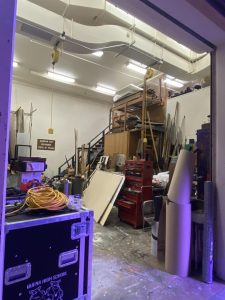
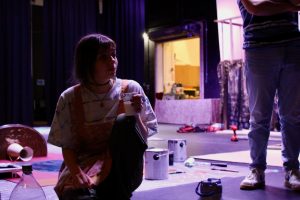
Another essential element that makes up any play or musical is the props and the scenes that make up the background and visuals. The prop crew spends a lot of time not just building custom props depending on what is needed but also reusing props from past productions, borrowing from other schools or even buying new ones online.
“We have a spot called heaven, which is the second floor of the stage craft room, and that is where all of our props are,” junior and prop master Rosetta Merenda said. “So we have stuff that other people made in other productions; we have stuff we bought. Pretty much after a show, anything that can’t be returned is put up in heaven for later use.”
A lot of work goes into these productions that have limited time to get done, some of which can be seen front and center and some take place behind the curtains. Thanks to the efforts of stage crew, the little details that make the play truly come to life are there for everyone to enjoy.
“I want them to know that they’re doing a great job, and even with the issues we’ve been having with people getting sick and any kind of unexpected problems, they have recovered perfectly and they’re doing an amazing job,” Farnsworth said.