



























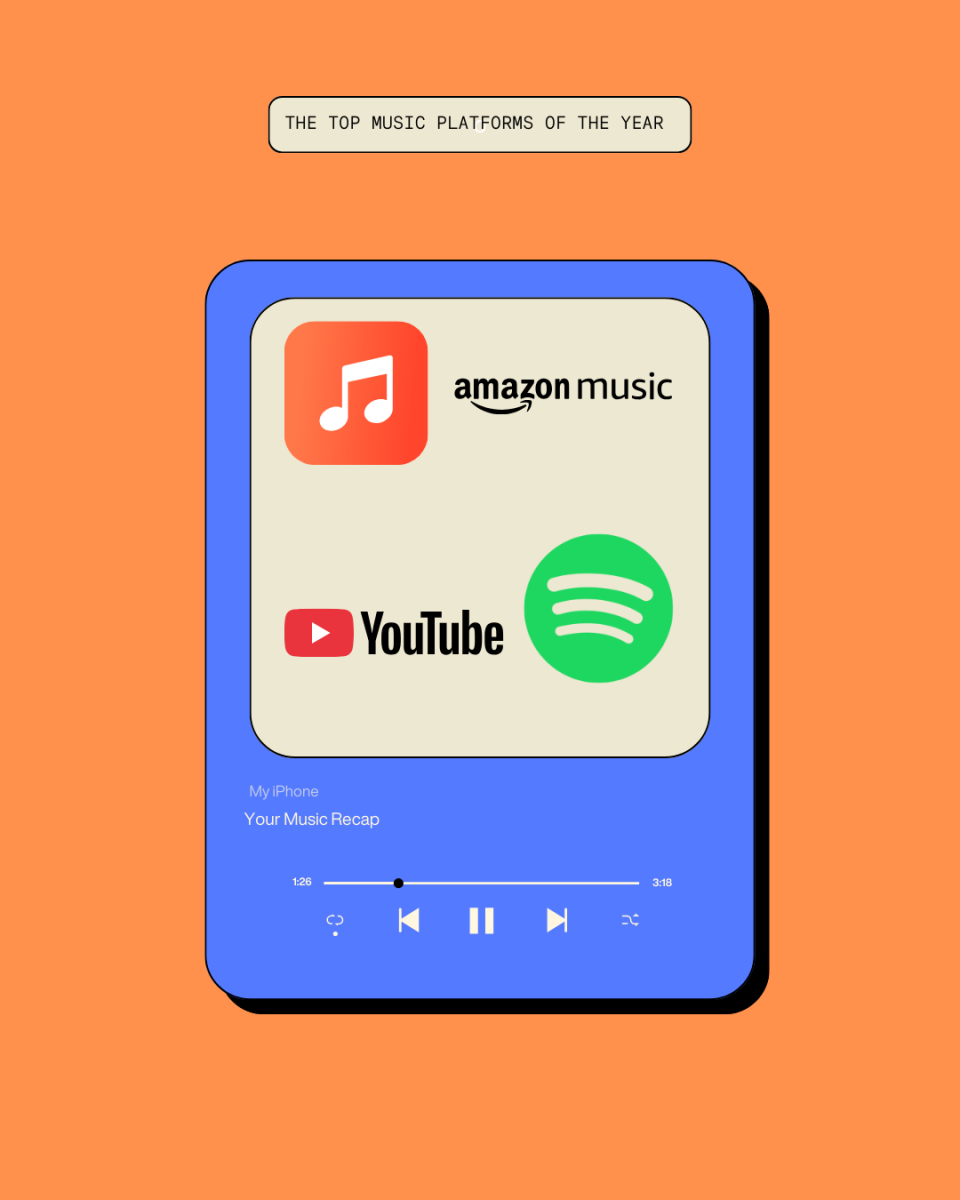
Between the waning days of November and early December, music listeners eagerly wait for their annual music recap to release on their respective platform they use. Popularized by Spotify with their Spotify Wrapped, the familiar, long awaited video style reveal of a year’s worth of listening habits is all the buzz as social media is flooded with everyone’s music recap, excited to boast their top artists and share their statistics with friends and followers.
Spotify’s annual personalized music recap has been around since 2016 and, while it was not the first to have an end of the year recap, it was the first to personalize a recap curated to listeners in the way that has gone viral over the years and has encouraged other music platforms to include their version of Spotify Wrapped.
In recent years, other music platforms have followed suit, with Apple Music rolling out their Apple Music Replay in 2019, Amazon Music launching their Amazon Music Delivered last year and even YouTube joining in this year with a video recap called YouTube Recap that features both top channels and music.
“I think the features of having the Spotify Wrapped adds on to the popularity of Spotify, but I think it’s a good thing that they’re adding it to the other apps,” senior Camila Flores said. “Personally, when I didn’t use Spotify, I felt a little left out because I also wanted some kind of wrap to see the accumulation of songs that I listened to throughout the year.”
Despite the different platforms, the features are all very similar, showing listeners the usual statistics such as top artist, song, album and more. New this year, for Spotify Wrapped specifically, is the introduction of “Listening Age” where the user’s music taste is linked to the age that correlates the most, and for Apple Music, new artists discovered this past year. The way in which data is collected to make the recaps are also very similar with the data collecting period starting in January and ending in November.
“I think that Amazon music did a great job in implementing that feature in their app, not to compete with Spotify, [but to] bring in more people who don’t use Spotify,” Flores said.
As with every year, these personalized music recaps have been criticized for being inaccurate with some saying that their statistics are inaccurate and surprised with their top songs and artists.
“It didn’t really give me any information of why those were the top ones. It didn’t say how many hours I listened to,” sophomore Gillian Lee said.
Beyond the fun, the annual recap is a marketing strategy that Spotify has perfected in free advertisement from the sheer amount of people sharing, posting and engaging with Spotify Wrapped online. Each year has broken previous records in user engagement both within the app and on social media, with this year being no different. These music recaps also allow friends to discover new artists after seeing others’ top artists and songs, creating a fun way to showcase music tastes to others while also finding some new ones.
“They unintentionally put people on songs and artists without even trying. So I think it’s a good method for finding new artists and new songs to listen to,” Flores said.
As the year wraps up with the dead period where no music data is tracked, consider using the time to listen to the guilty pleasure songs that will not be factored into next year’s recap or getting a head start on next year’s.
“I think music is a big part of people’s lives and I think it’ll continue to be in the future,” Flores said.