









































Tensions were high and the room was silent as the Ventura Unified School District (VUSD) board members reviewed selected classified and certificated staff positions listed for potential termination. The weeks leading up to the Feb. 10 meeting were filled with strong negative community opinions on social media, union protests and discussion within the VUSD community. After the Feb. 24 board meeting, which featured a statement by VUSD board trustee Calvin Peterson before public comment, some VUSD staff, students and community members were left even more confused, frustrated and motivated to make a change.
Board Meeting 1: February 10, 2026
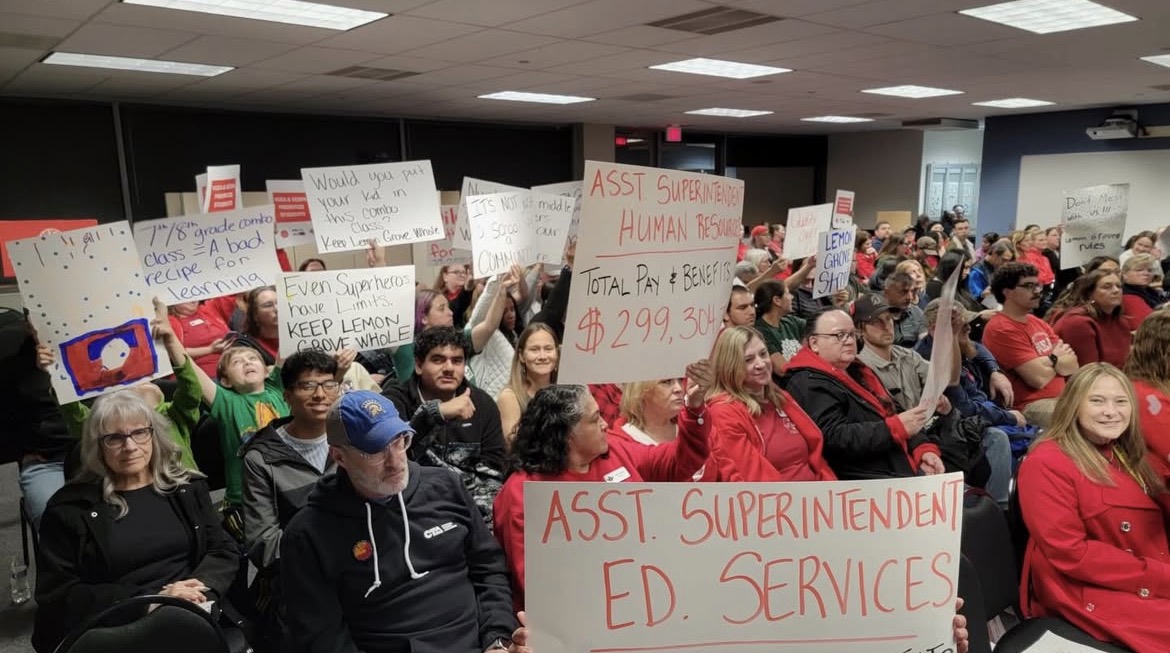
The meeting on Feb. 10 drew large numbers of audience members, filling up the main room and overflow room. More than 60 individuals signed up to speak during public comment, with each person getting three minutes to share their views about budgeting difficulties, salary inequities and the importance of job positions that were being put to vote to potentially eliminate in the upcoming 2026-2027 school year.
“I appreciate that the cuts this year are not as draconian as last year,” Buena teacher Andrew Coates said during public comment. “However, any good faith gained has been negated by these proposals [of eliminating positions].”
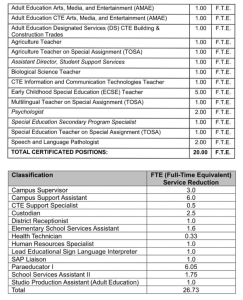
By the end of public comment, the board discussed the resolution on reductions proposed days before and voted unanimously to pass it. As a result, this decision cut 20 certificated positions and 26.73 certificated full time equivalent (FTE) positions. These cuts led to many questions about the salaries of board members and administrators in face of many workers losing their jobs.
“We understand that questions about compensation often arise during difficult budget conversations. It is important to note that the district has made reductions to management and administrative positions as part of our efforts to address the budget deficit,” board president James Forsythe said.
Board Meeting 2: February 24, 2026
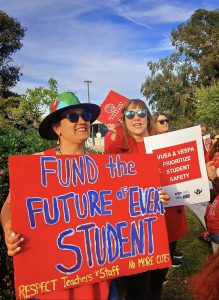
The next meeting hosted on Feb. 24 began at 6:00 p.m., but union members from the Ventura Education Support Professionals (VESPA) and the Ventura Unified Education Association (VUEA) arrived hours earlier to converse, protest with signs and chants, and share their disagreement as the board members deliberated in closed sessions and prepared for the meeting.
Audience members squeezed into the room with signs stating, “VUEA and VESPA prioritize student safety,” or some displaying Dr. Castro’s and other board members’ alleged salaries, as the meeting began.
When asked about the large crowds in attendance, Forsythe explained that the feedback “[the board] hears helps [them] better understand the concerns and perspectives of those impacted”.
Prior to public comments opening to the 14 speakers on the docket, trustee Peterson started the section of the meeting with his own sentiment.
“I can only speak for 20 percent of the board…but we are not making decisions based on emotion,” trustee Peterson said. “We are trying to make decisions based on facts…not based on what people feel we should do.”
Speaking for about four minutes, Peterson detailed what would be most effective in public comment speeches for his decision in the voting process, to his 20 percent of influence in the decision making process.
“When you come up here, give us the facts,” Peterson said. “It is not a public meeting for people to just come up and spill their emotions.”
Peterson’s statement only seemed to increase the reaction from the audience and much of the public commentary that followed countered Peterson’s message.
“I did sit through my first round of layoffs, and it is emotional when you sit with employees that work with students and say ‘there is no job for you,’” VESPA president Carol Peek said.
In the majority of public comment made, salary was the center of the discussion as it was at the prior meeting. Audience members pointed out the differences in salaries and criticised the board members for laying workers off while high management had higher salaries than most other employees.
“The financial challenges school districts are facing are not driven by salaries alone. Like many districts across California, we are experiencing declining enrollment, rising operational costs, and increasing state and federal mandates that are not fully funded,” Dr. Castro said. “State leaders and policymakers need to continue to work together to address the gap between mandated programs and the funding provided to support them; these financial pressures will continue to impact public school systems.”
The February board meetings have held many large reactions, voiced opinions and important decisions. However, many believe there is still a lot of work to be done and VUSD community members are considering who they want in the district leadership positions following the ending of terms for certain board members.
“Maybe the voters will consider the facts, as well as their emotions, when filling out their ballots,” Coates said.
There is no doubt that the discussions being had and the decisions being made are difficult for both parties, and while there is disagreement amongst the VUSD community, it is important to look towards solutions that benefit everyone involved in the school district.
“At the end of the day, our responsibility as a Board of Education is to make decisions that support students and ensure we are financially stable for future generations of students. That focus on students will continue to guide our work,” Forsythe said.