





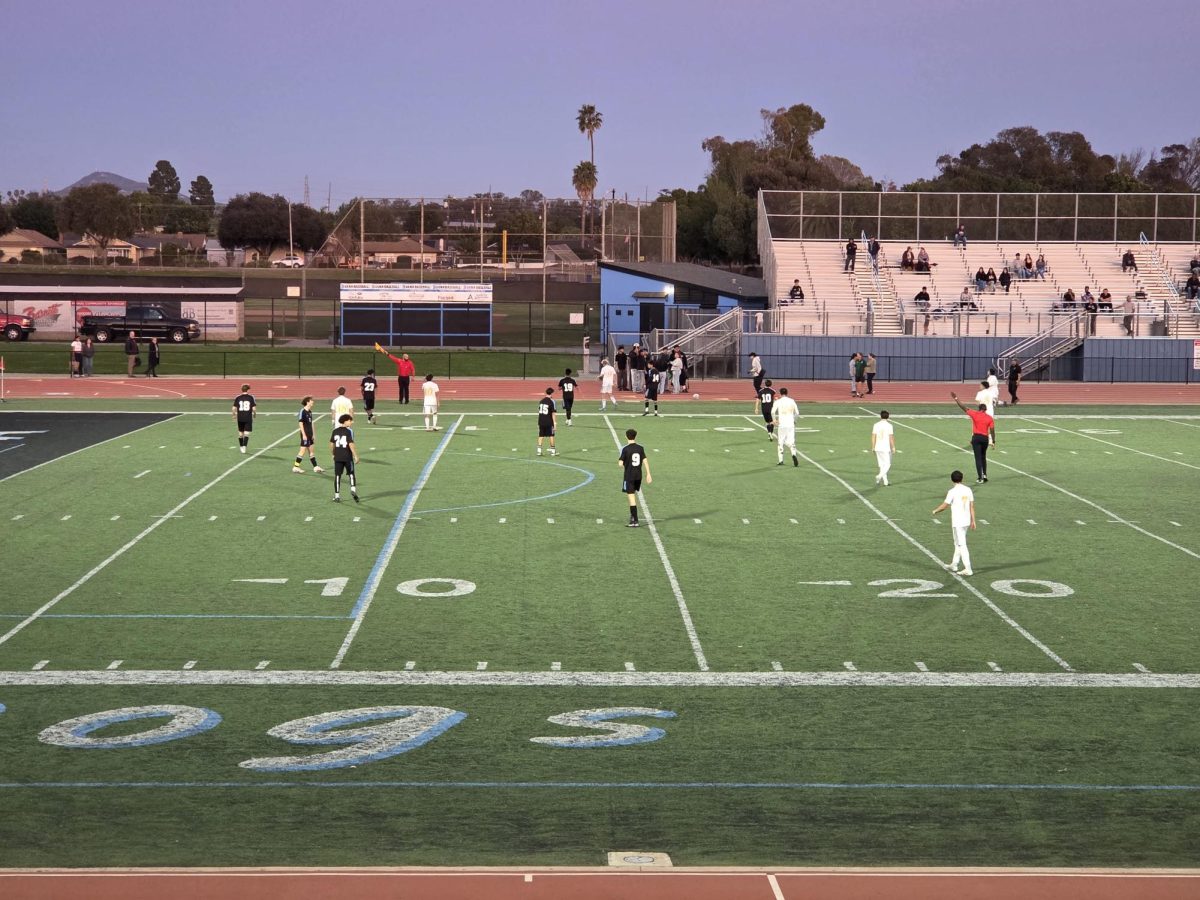

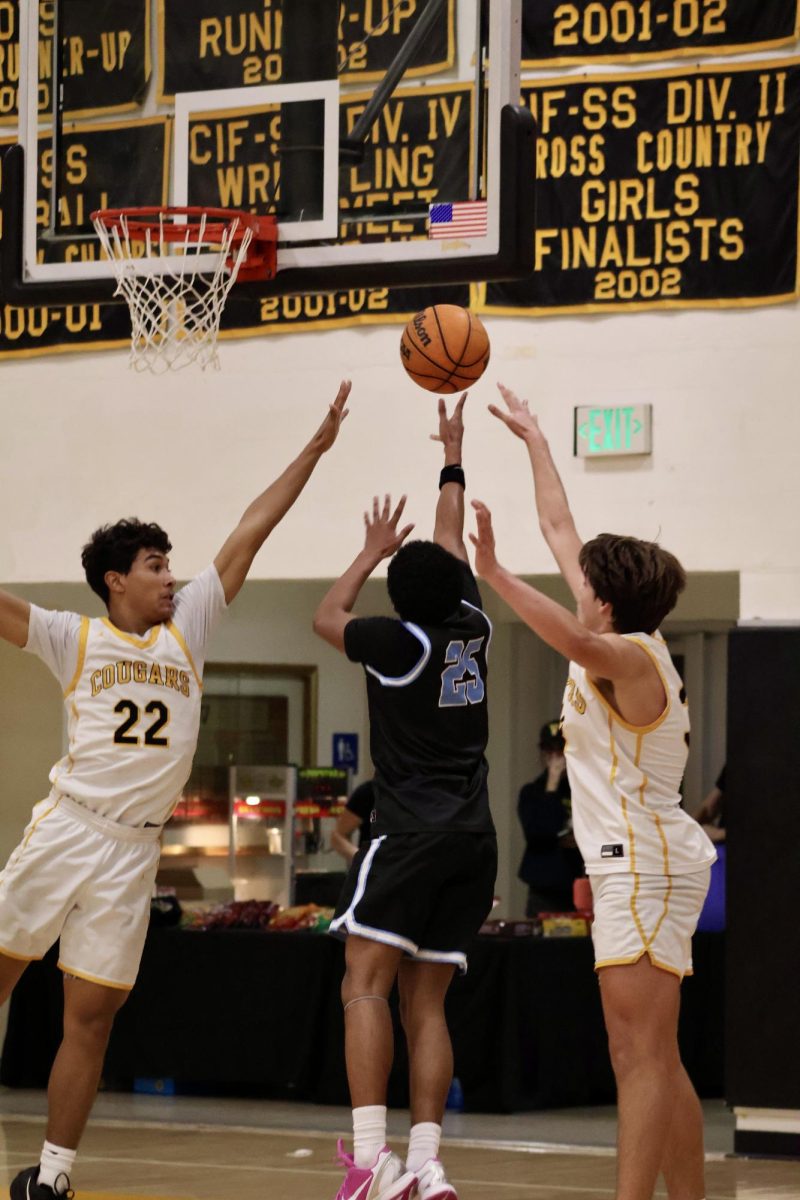
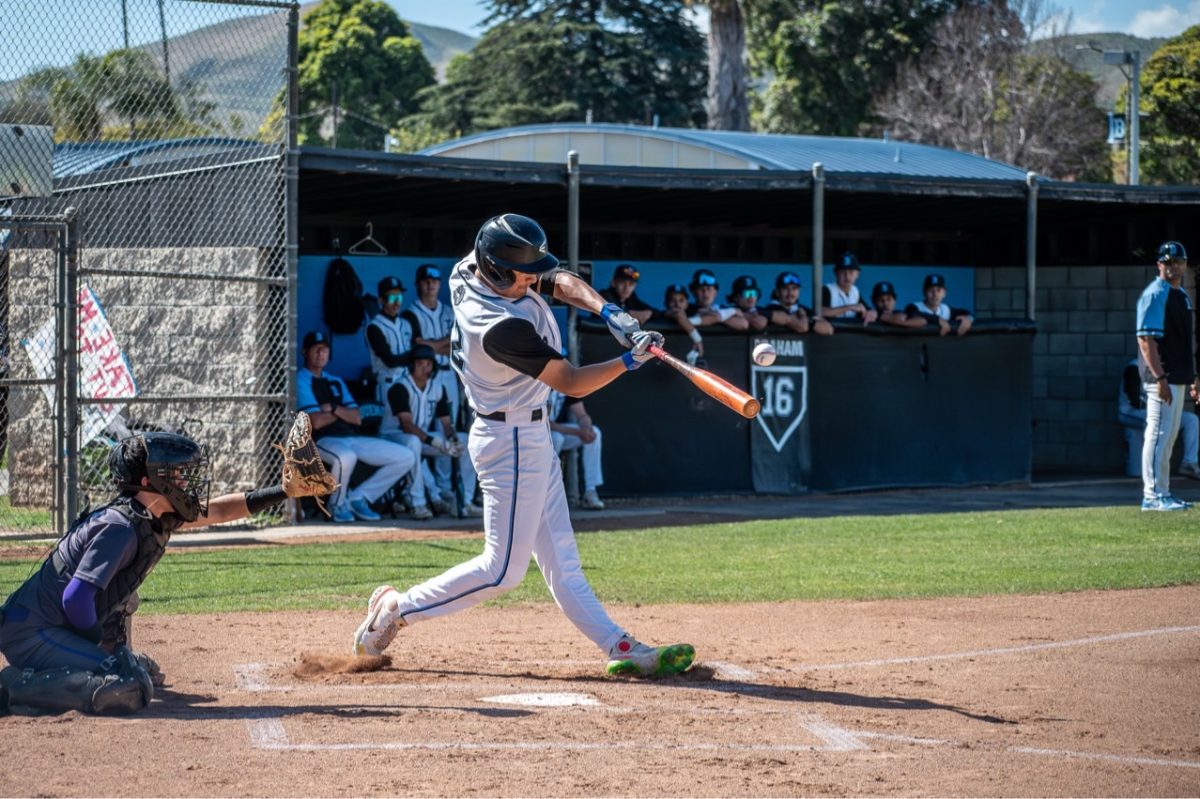
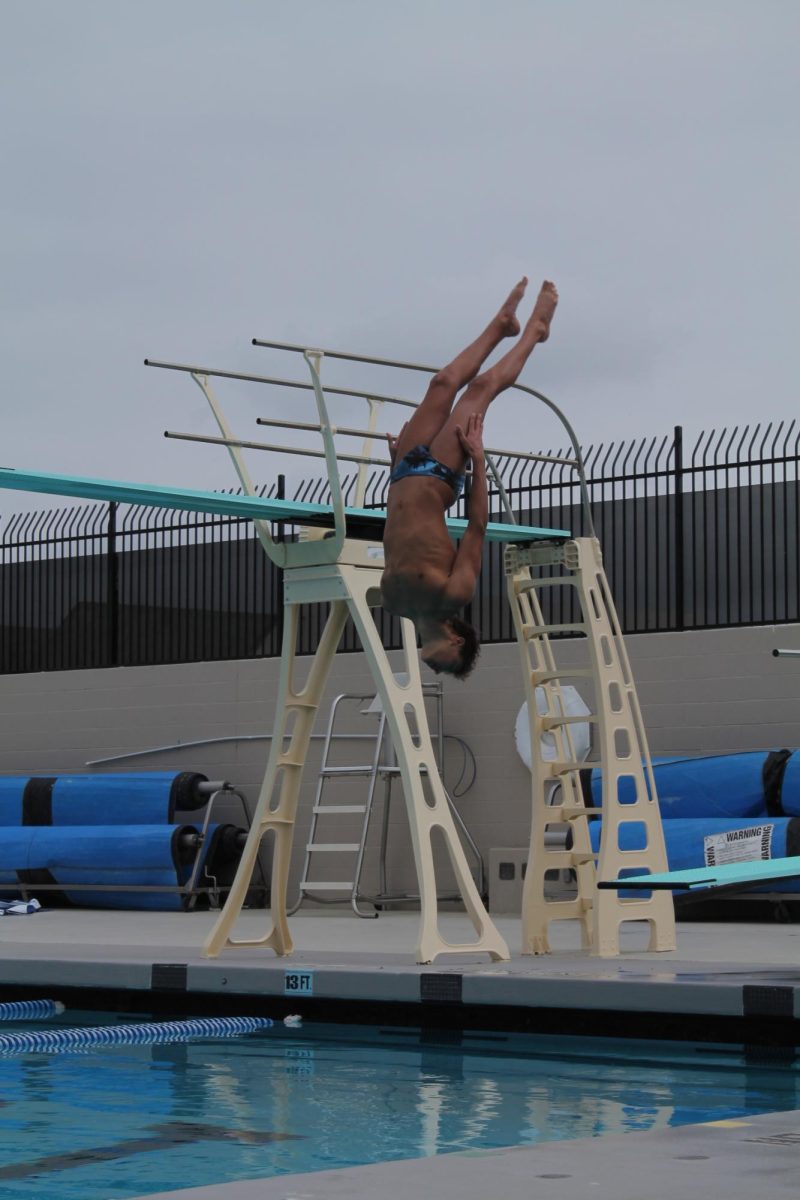
































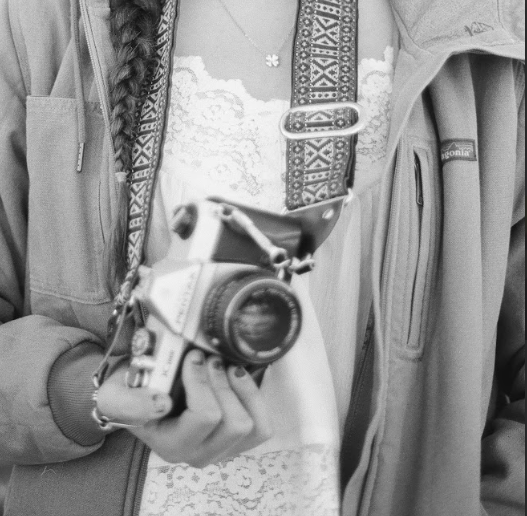
Analog film is a form of photography where moments are captured and developed by hand with chemicals that create an image using light exposure and chemical reactions. Buena’s photography program has progressed rapidly in the last few years, with analog film photography being introduced to the students this school year with the help from yearbook adviser and photography teacher Emmet Cullen in room 83 and Dexter’s Cameras. Buena students now have access to film cameras, rolls, development equipment and the option to print their photos as posters, glass, clothing and even tile.
Cullen’s development process is very D.I.Y., with students utilizing donated materials and the natural features of the classroom to learn how to develop their film rolls in a unique and independent way. With his own personal passion for film, he decided to write a grant to acquire the right resources and materials to make this happen. Fortunately, it was passed through successfully, supplying the classroom with a variety of cameras and both black and white and colored film rolls. His collection of cameras goes beyond the common Kodak to a vintage U.S.S.R. camera used by the Romanov family themselves.
Cullen emphasized wanting to inspire his students to learn and experiment with “legit analog photography” that starts with getting a film camera and a roll of film, and going outside and shooting on it.
Senior Joseph Sullivan, experienced digital photographer and student of Cullen’s, has used this opportunity to branch out into analog film photography, referring to it as “more authentic, [capturing] the moment more.”
However, Sullivan and other students do not deny that the process can be difficult to get comfortable with at first. The first step is to unroll the film and attach it to a canister within a bag sealed off from light. During this part of the process, Sullivan said it can be “hard because you can’t see what you’re doing. It’s by feel, and sometimes I expose it to light.”
After a few times doing this confidently, the process goes by in a matter of ten minutes. When entering the backside of room 83, rolls of damp film freshly washed with the development chemicals can be seen hanging from clips along the bars of lights on the ceiling.
Cullen credits this new wave of film photography on campus to alumni Lyndie Brown, who inspired Cullen to get more involved with film, John Cornelius, a local film camera expert, Darkroom 37 where Cullen furthered his development experiences and Dexter’s Cameras, who have “taken [Cullen] in and showed [him] the ropes.”