


























































As a high school senior, I am very aware of the system I am a part of. It’s a system that I am grateful for because it provides opportunities in a world that values education. However, it is also extremely competitive and, at times, seemingly impossible to secure the desired result: acceptance into your dream school.
For college applicants, this spring looms near with the answers to at least what our next four years will look like. The moment of acceptance, wait-listing or rejection after years of building a resume of diversity, longevity and dedication. It’s so exciting, and the system makes you work for it so much that when you get that acceptance it truly does feel earned and gratifying.
However, it is not entirely secure, even for the “most accomplished” students. In a society that values and prioritizes education as a launch-pad to a successful future, it can be daunting to know that even if you check every box that you’re told will get you there, you still might not. Why? I don’t know. My belief is that if you put all your effort in and stay true to yourself, you will end up right where you’re supposed to be, even if that’s not where you expected. So, with that in mind, I await my own answer from my dream college, hoping that where I dream to end up and where I really do are the same place.
The way that modern students feel about being chosen by a college holds many similarities to women in the Regency period hoping to marry, such as the characters in Jane Austen’s “Pride & Prejudice”.
Pride & Prejudice explores contradicting, unrealistic standards set for women. Jane Austen critiqued how women were expected to be so widely accomplished on every subject possible, while not being overly opinionated, all the while being very rich.
Excerpt from Pride & Prejudice by Jane Austen:
“A woman must have a thorough knowledge of music, singing, drawing, dancing, and the modern languages, to deserve the word; and besides all this, she must possess a certain something in her air and manner of walking, the tone of her voice, her address and expressions, or the word will be but half deserved.”
— Miss Bingley (with additions by Mr. Darcy)
“I never saw such a woman.” – Elizabeth Bennet in response to hearing the unrealistic standards set for women in a patriarchal society.
In Cora Frazier’s article in The New Yorker, she draws parallels between Austen’s novel and modern women. While in class with English teacher and Pawprint Magazine advisor Karin Childress, I was inspired by her idea to adapt this to another nearly impossible standard to measure up to: College Acceptance.
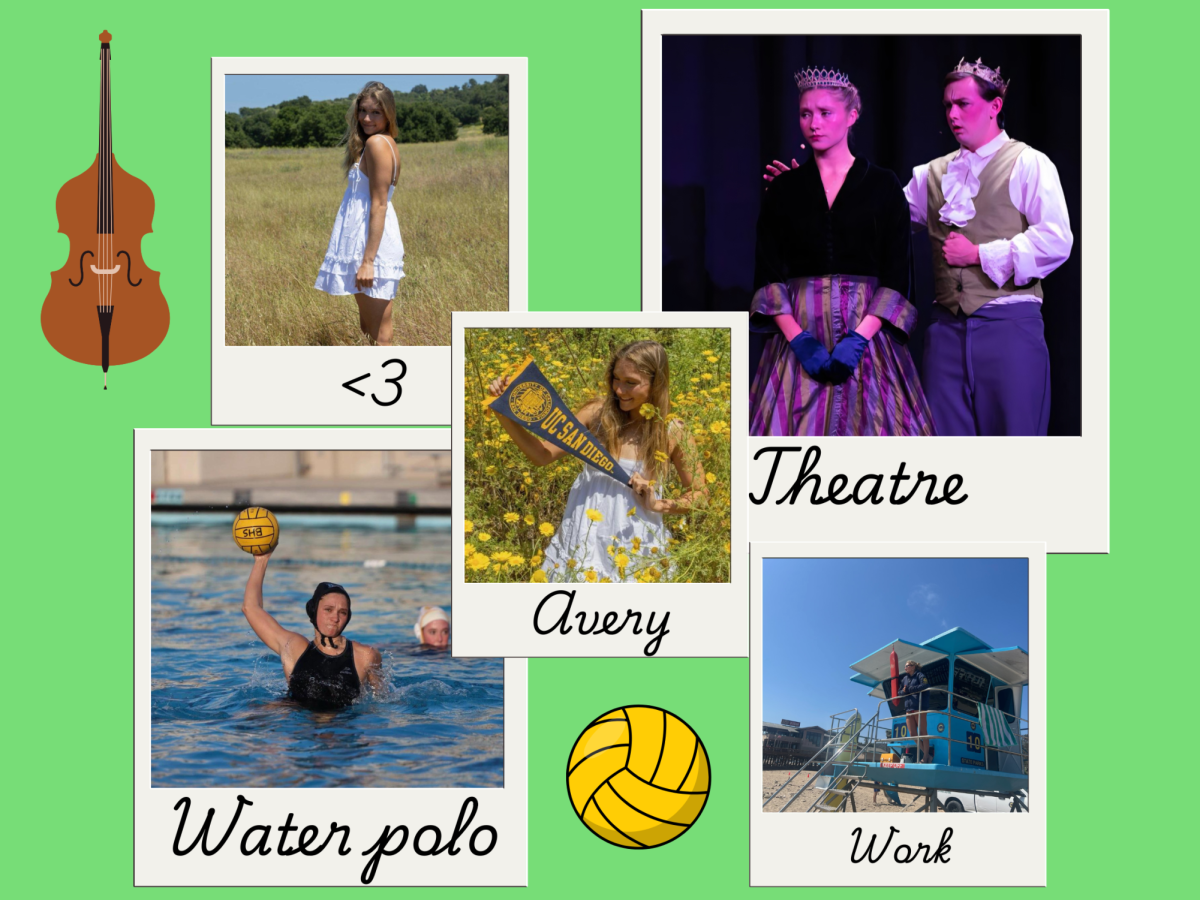
A high school senior must have a thorough knowledge of music, mathematics, science, writing, art, history and foreign languages, to deserve the college acceptance: and besides all this, have a lively personal life and dedication towards their community.
A high school senior should understand the nuances of poetry and art, keep up with their advanced math class, start a volunteer club, lead their team to Division-1, study all night and be well rested for early morning practices and ASB events.
A high school senior must be more achieved than their competitors in all these subjects, yet also entirely unique and individual. They cannot be too widely accomplished, as that would make them too broad, because a high school senior should have a specialized focus on something.
Education is a human right and an opportunity. It provides a base of knowledge that students can choose to further pursue in the workforce, trade school, university, the military or law enforcement, travel or anything else they desire.
College is an amazing path that can open doors to lifelong careers. It gives young adults the opportunity to explore their interests, develop their work ethics and make deep connections. It is very exciting, but also very stressful. It creates a competitive dynamic between college-bound students to try to be as well-accomplished, yet focused as they can possibly be, while still being unique from the others.
“[The modern education system] massively stresses people out and leads to burnout at a young age, leading to perfectionist tendencies. In the U.S., [high school] doesn’t have the work-life balance that we have when we get to the adult world. There’s so much pressure to do so much in school, with extra curricular activities and volunteering. It takes away from what should be an intrinsically good thing that just becomes checking a box,” Childress said.
As I enter the season of college acceptances with the class of 2026, I acknowledge all my accomplishments and release the stress of worrying that I didn’t do enough, or that I somehow did too much. However, the dream I’m chasing alongside my peers is not impossible, and is not the only path. No matter what that college portal tells you, you’ll get where you want to go if you keep moving forward. Still, good luck to all the students that can relate, and wish me luck too!
“The effort you put in [to school] is what you will get out of it, and sometimes you go to a school and it’s great, and sometimes you change paths and go to a different school, but that opens up opportunities there too,” Childress said.